A Professional's Take on the New Workforce Wf 2850
Introduction
In the crowded market of home and small-office printers, the Workforce Wf 2850 positions itself as a compact, feature-rich all-in-one designed for users who need a balance of print, scan, copy and fax capabilities without occupying a large footprint. This article evaluates the product from a professional perspective within the Electronics category, examining real-world use cases, likely buyer priorities, performance characteristics, and long-term ownership considerations. The aim is to provide an objective, helpful guide for decision-makers who are comparing multifunction devices for a home office, a micro-business, or light departmental use.
Overview and Key Features
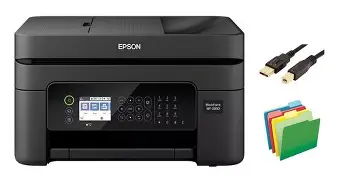
The Workforce Wf 2850 is an inkjet-based multifunction printer (MFP) that emphasizes convenience and connectivity. Typical features for a device in this class include:
- All-in-one capability: print, scan, copy, and fax in a single chassis.
- Automatic duplex printing: double-sided printing to reduce paper use.
- Automatic Document Feeder (ADF): for batch scanning and copying.
- Wireless connectivity: Wi‑Fi and mobile printing support for smartphone/tablet workflows.
- LCD control panel: for local configuration and status monitoring.
Those elements combine to make the Workforce Wf 2850 attractive to buyers who need moderate throughput and flexible placement in small workspaces.
Detailed Product Analysis
Design and Build
The Workforce Wf 2850 is built to be compact, with a footprint suitable for a bookshelf, small desk, or a reception counter. The chassis materials are standard for consumer-grade printers—mostly molded plastics—giving a balance between cost and durability. From a practical perspective, the design emphasizes easy access to paper trays and ink cartridges, which reduces downtime during routine maintenance.
Usability and Setup
Setup for this class of MFP typically aims to be straightforward: guided on-screen prompts, a simple paper path, and wireless setup through a phone app or a USB connection. For small-business IT administrators, the device will usually offer basic configuration options via a local control panel and web interface. Integration into existing wireless networks and mobile printing ecosystems (AirPrint, Mopria, vendor mobile apps) is a key expectation, and the Workforce Wf 2850 addresses these needs with standard wireless features.
Print Quality and Speed
For most day-to-day documents—letters, invoices, internal reports—the Workforce Wf 2850 produces crisp text and acceptable color graphics. It is optimized for general office output rather than high-end photo production. Color accuracy and saturation are sufficient for charts and client-facing documents, but professionals who require color-critical prints (e.g., graphic designers or photographers) will notice limitations compared with dedicated photo printers.
Print speeds are competitive for an entry-level MFP, and actual throughput will depend on print settings (draft vs. standard quality), duplexing, and the complexity of documents. Buyers focused on monthly volume should compare official duty-cycle guidance with their expected pages per month to ensure the device fits their workload.
Scanning and Copying
The inclusion of an ADF makes the Workforce Wf 2850 suitable for scanning multipage documents such as contracts and invoices, which is a practical advantage in small businesses and home offices. Scan resolution and color depth are adequate for digitizing receipts, business documents, and occasional graphics. The flatbed surface accommodates delicate documents and thicker media when single-sheet scans are preferred.
Discover deals on Electronics — updated daily.
Browse Now →Maintenance and Running Costs
Running costs are frequently the deciding factor for buyers. Inkjet MFPs typically have a lower initial purchase price but higher ongoing consumable costs compared to monochrome lasers. The Workforce Wf 2850 commonly uses replaceable color and black ink cartridges; buyers will want to compare standard versus high-yield cartridge pricing, and factor in expected page yields to calculate cost per page. In practice, high-volume users will find that ink expense and frequent cartridge changes can become burdensome.
Connectivity and Ecosystem
Modern small-office printers live and die by their network features. The Workforce Wf 2850 supports basic wireless printing and mobile app integration which enables printing from phones and tablets. Additional conveniences often include a USB port for direct printing, and a simple web interface for remote configuration. For environments that require advanced network management, IT teams should verify support for features such as WPA2/WPA3, static IP assignment, and central provisioning through device management tools.
Reliability and Longevity
Reliability depends on usage patterns and maintenance discipline. For light-to-moderate usage (a few hundred pages per month), the Workforce Wf 2850 should perform well for several years. However, heavy users may encounter accelerated wear on moving parts like the ADF and printhead. Scheduled cleaning cycles and using the device regularly to avoid ink drying are practical steps to prolong lifespan.
Real-World Use Cases
- Home office with mixed printing needs: Professionals who print invoices, reports and occasional marketing materials will benefit from the device’s small footprint and multifunction features.
- Micro-business or freelancer setup: A photographer or graphic designer working primarily with digital delivery may use it for proofs and client handouts, while relying on a specialist for final prints.
- Student or academic workspace: Affordable and flexible for printing essays, scanning research materials, and copying class handouts.
- Reception desk or shared apartment: Low-to-moderate volume scanning/copying needs are easily supported, and built-in fax can still be useful in healthcare or legal micro-practices that rely on legacy workflows.
Pros & Cons
Pros
- Compact design fits small workspaces and multi-use environments.
- All-in-one functionality (print/scan/copy/fax) reduces the need for multiple devices.
- Automatic duplexing and ADF increase productivity for multipage documents.
- Wireless and mobile printing support enable flexible workflows.
- Relatively low upfront cost compared to full-featured office MFPs.
Cons
- Ink running costs can be high for heavy users compared with laser alternatives.
- Color print quality is adequate but not suitable for professional photo or color-critical work.
- Plastic build and consumer-grade components shorten usable life under continuous heavy use.
- Feature set may lack advanced security and management capabilities needed in larger networks.
- Replacement cartridges and maintenance cycles add ongoing operational tasks.
Comparison Table
| Feature | Workforce Wf 2850 | Typical Monochrome Laser MFP | Compact Photo Inkjet (Dedicated) |
|---|---|---|---|
| Primary Strength | All-in-one versatility for documents | Fast, low per-page cost for black text | High-quality color/photo prints |
| Initial Cost | Low to mid | Mid | Mid to high |
| Running Cost (per page) | Moderate to high (color) | Low (black) | High (specialized inks) |
| Print Speed | Moderate (balanced color/mono) | High (mono) | Slow to moderate (high quality) |
| Scan/Copy | Included; ADF for multi-page | Often included; ADF common | May be limited or standalone |
| Ideal For | Home offices, freelancers, small teams | Small offices with high text volume | Photography and design proofs |
Buying Guide: What Professionals Should Consider
When evaluating an all-in-one like the Workforce Wf 2850, professionals should weigh a mix of technical specifications and operational realities. The following checklist helps prioritize requirements and avoid common pitfalls:
1. Monthly Page Volume
Estimate the average monthly pages (both color and black) and compare to the device’s recommended monthly duty cycle. If monthly demand is modest (several hundred pages), an inkjet MFP is cost-effective. For consistent high-volume printing, a monochrome laser may be more economical over time.
2. Cost Per Page and Cartridge Options
Investigate both standard and high-yield cartridge pricing. Calculate cost per page using realistic yield figures and current cartridge prices. Consider third-party refill options carefully—while they can reduce cost, they may impact warranty coverage and printhead longevity.
3. Connectivity and Compatibility
Confirm support for the mobile platforms and network protocols used in the workplace. For managed environments, ensure there are options for static IP, SNMP monitoring, and secure wireless modes. If printing from smartphones and tablets is common, verify the vendor’s mobile app reliability and print quality from those apps.
4. Paper Handling and Media Types
Check the paper tray capacity and whether the device supports the media sizes and weights required (e.g., envelopes, cardstock, labels). An ADF that supports duplex scanning is valuable for processing multipage contracts and client files efficiently.
Find top-rated Electronics products at great prices.
View Offers →5. Security and Administrative Controls
For devices that will be on a shared network, evaluate security features: password-protected settings, secure fax reception (if used), and firmware update practices. Small businesses that handle sensitive client data should prioritize secure network settings.
6. Physical Footprint and Noise
Measure the space where the device will live. Consider operational noise levels if placed in a shared workspace or near desks. The Workforce Wf 2850’s compact design is a benefit, but placement still matters for accessibility and ventilation.
7. Warranty and Support
Review the manufacturer’s warranty, included support options, and availability of replacement parts in the region. For mission-critical environments, extended support plans or on-site service can be worth the premium.
8. Long-Term Considerations
Ask about expected end-of-life for consumables and the availability of firmware updates. Consider the environmental impact—some purchasers weigh manufacturer take-back programs and cartridge recycling when choosing a device.
Practical Buying Scenarios
Several archetypal buyers can use this guidance to determine if the Workforce Wf 2850 fits their needs:
- Freelance consultant: Needs a reliable all-in-one for contracts and client handouts; moderate monthly prints; values compact design and mobile printing.
- Small clinic reception: Requires scanning and faxing, occasional color prints; prioritizes ease of use and an ADF for multi-page patient forms.
- Student or home user: Looks for low upfront cost and flexibility; prints assignments, scans receipts; values simple setup and mobile printing.
- Small office with high black volume: May use the Workforce Wf 2850 for occasional color needs but will likely pair it with a monochrome laser MFP for heavy text printing to reduce per-page costs.
Maintenance Tips for Longevity
- Run a nozzle check and cleaning cycle if color quality degrades; use the device regularly to prevent ink drying.
- Use high-yield cartridges when available to reduce the frequency of changes and lower per-page costs.
- Keep firmware updated to benefit from bug fixes and security patches.
- Store spare cartridges in a cool, dry place and follow manufacturer guidance for expiration dates.
- When scanning sensitive documents, configure local storage and network settings to avoid accidental exposure.
Conclusion
For professionals seeking a compact, feature-packed all-in-one for light-to-moderate workloads, the Workforce Wf 2850 represents a sensible option. It blends practical features—automatic duplexing, an ADF, and wireless connectivity—into a package that fits small workspaces and multi-use environments. The trade-offs are familiar: ink running costs and performance limitations for color-critical tasks. Decision-makers should balance upfront price against expected monthly volume and prioritize features that align with everyday workflows: connectivity, paper handling, and long-term consumable costs. With the right expectations and maintenance habits, the Workforce Wf 2850 can be a dependable workhorse for home offices, freelancers, and micro-businesses.