Don't Buy the Obsbot Tiny 3 Until You Read This Full Analysis
Introduction
The Obsbot Tiny 3 arrived amid growing demand for smarter webcams that can follow a subject, reduce framing hassle, and make hybrid meetings and solo content creation feel more professional. Marketed as an AI-powered, motorized webcam with subject tracking and a compact form factor, it promises to replace static webcams and even external PTZ systems for many everyday workflows. This article offers a thorough, third‑person analysis: what the Obsbot Tiny 3 actually delivers, where it falls short, and which buyers should (or should not) consider it. The goal is to give potential buyers the context they need to make an informed decision without marketing fluff.
What Is the Obsbot Tiny 3?
The Obsbot Tiny 3 is a compact camera designed for desktop and laptop use that combines a motorized head with onboard AI processing to provide automatic framing, face and body tracking, and an array of convenience-oriented controls (gesture commands, auto-follow, and configurable framing presets). It targets a mix of users: remote workers who want a dynamic presence on video calls, content creators and streamers who need camera motion without a dedicated operator, and educators or presenters who move around while teaching.
Unlike fixed webcams, the Tiny 3 can pan and tilt to follow motion within a limited arc. It typically ships with companion software that enables finer control over tracking sensitivity, virtual backgrounds, exposure, and color profiles, and often supports plug-and-play operation for video conferencing apps and streaming software.
Detailed Product Analysis
Build and Design
Physically, the Tiny 3 adopts a compact footprint intended to sit atop a laptop screen, an external monitor, or on a small desktop tripod. The motorized head is small but mechanically audible when active: users will notice soft whirring when it rotates. The device focuses on portability and unobtrusiveness — it is much less bulky than full PTZ cameras, and the design emphasizes a balance between a stable mounting platform and the freedom of motorized movement.
Build materials are a mix of plastics and metal components at stress points. The mounting clip is designed to be protective of displays and stable enough to avoid frequent readjustment, although heavy or thin laptop lids may require a small tripod or weighted base for optimal stability. A physical privacy cover or shutter is a common feature in this product class and should be confirmed on the final retail model if privacy is a priority.
Video Quality and Optics
The Tiny 3 aims to offer a step up from built-in laptop cameras, with an emphasis on color processing and exposure handling. In well-lit conditions it produces clean images with reasonable dynamic range and skin tone reproduction, although the final look depends heavily on the companion software's image processing and the ambient lighting. In lower light scenarios the camera relies on digital exposure compensation and noise reduction; while this can keep images usable, it does not equal dedicated low-light lenses or larger sensor cameras.
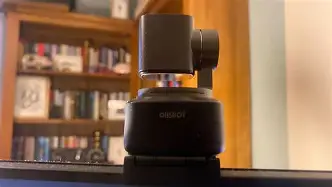
One important point: users who prioritize raw optical quality — extremely shallow depth of field, cinematic bokeh, or exceptionally low noise at high ISO — will still prefer mirrorless or DSLR cameras with capture cards. The Tiny 3 is oriented toward convenience and intelligent framing rather than replacing higher-end dedicated video cameras.
AI Tracking and Motorized Performance
The headline feature is the AI tracking. The Tiny 3's tracking combines on-device machine learning with the motorized mechanism to keep a subject centered during movement. In practice, the system excels for moderate, predictable movement: standing up and stepping to the side, pacing within a teaching position, or leaning in and out for emphasis. It reduces the need to manually reframe the shot and avoids chopped-off limbs that occur with fixed webcams when a subject moves.
Find top-rated Laptops & Computers products at great prices.
See Deals →However, there are limits. Very fast movement, abrupt changes of direction, or multiple moving subjects in the frame can confuse the algorithm. Tracking occasionally lags or briefly overshoots, then recenters. For single-speaker presentations and meetings, the experience is typically smooth; for dynamic multi-person scenes the Tiny 3 will be less reliable than a human-operated PTZ camera or a multi-camera setup with manual switching.
Software Ecosystem and Integration
Companion software is central to the Tiny 3 experience. It generally allows users to toggle tracking modes, adjust smoothing and follow speed, set framing presets, manage exposure and white balance, and apply virtual backgrounds or face enhancement filters. Integration with common conferencing platforms is usually seamless via standard webcam drivers; OBS and other streaming tools often recognize the camera as a webcam source, enabling overlays and multi-source scenes.
Software stability and driver support can make or break the user experience. Buyers should check current user reports for the latest software releases, as initial firmware can introduce quirks that vendors patch over time. Cross-platform support is another practical consideration: macOS users, for example, sometimes experience limited feature parity compared with Windows when a vendor's software targets one OS first.
Audio and Ancillary Features
Many buyers assume an all-in-one solution; the Tiny 3 typically includes either a basic built-in microphone or expects users to pair the camera with a separate microphone for higher audio quality. Onboard mics are convenient but limited in clarity and noise rejection; podcasting and broadcast users will want an external USB or XLR microphone. Gesture controls (raise hand to reframe, wave to lock) can be handy but also introduce accidental commands if not calibrated properly.
Real-World Use Cases
The Obsbot Tiny 3 is best-suited to several common scenarios:
- Hybrid workers and managers who move around a desk while presenting to retain natural body language without constantly repositioning a fixed webcam.
- Solo content creators and educators who need simple camera motion for lectures, tutorials, or live streams and do not want to operate PTZ hardware.
- Streamers on a budget who want dynamic framing but do not have a multi-camera rig or a camera operator.
- Video interviews and recorded logs where maintaining subject framing without distraction is more important than cinematic image quality.
It is less ideal for scenarios that demand precise, sudden framing changes, multi-participant tracking, or where the camera must remain completely silent (the motor noise is noticeable when it moves near a microphone).
Pros & Cons
- Pros
- Intuitive AI tracking that keeps a single subject framed during moderate movement
- Compact, portable form factor suitable for laptops and small desks
- Typically simple plug-and-play compatibility with major conferencing and streaming apps
- Software-driven customization for framing, smoothing, and basic image adjustments
- Good fit for solo creators, educators, and mobile professionals
- Cons
- Motorized movement produces audible noise that can interfere with nearby microphones
- Tracking can falter with fast or unpredictable motion and with multiple moving subjects
- Image quality, while improved over built-in webcams, does not match larger-sensor cameras
- Software and firmware maturity affect feature stability and cross-platform parity
- Mount stability varies with laptop lid thickness; may require a tripod for some setups
Comparison: Obsbot Tiny 3 vs Common Alternatives
The following comparison table is intended to help buyers see where a motorized AI webcam fits relative to a static premium webcam and a small mirrorless-camera setup used with a capture device. The goal is practical differentiation rather than exhaustive spec-by-spec measurement.
Discover deals on Laptops & Computers — updated daily.
See Deals →| Category | Obsbot Tiny 3 (Motorized AI Webcam) | Premium Static Webcam (e.g., high-end USB webcam) | Mirrorless + Capture Card |
|---|---|---|---|
| Framing & Motion | Auto-tracking, motorized pan/tilt | Fixed frame; relies on wide-angle or manual pan | Manual framing or software PTZ with high-quality motion |
| Image Quality | Improved over built-in cameras; good color processing | Excellent for webcams; optimized glass and sensors | Best — large sensors, interchangeable lenses |
| Setup Complexity | Low to moderate (clip or tripod) | Very low (plug-and-play) | High (camera, capture card, cables, power) |
| Portability | High | High | Low |
| Audio | Basic onboard mic; external recommended | Basic to good onboard mic; external recommended | Requires external pro audio for best results |
| Price Range | Typically above basic webcams; mid-range for creators | Varies from affordable to premium | Highest initial and long-term investment |
Buying Guide: Is the Obsbot Tiny 3 Right for the Buyer?
Choosing a webcam or camera system is about balancing priorities: image quality, motion, ease of use, and budget. The following checklist and guidance help potential buyers determine whether the Tiny 3 fits their needs.
Considerations Before Buying
- Primary use case: If the goal is to add motion and presence in meetings, lectures, or solo streams without a camera operator, a motorized AI webcam is very compelling. If the primary goal is the highest possible image fidelity for video production, a mirrorless solution remains superior.
- Environment and lighting: The Tiny 3 benefits from good lighting. Buyers who work in dimly lit rooms should plan to invest in lighting (key light or ring light) to get the best results.
- Audio chain: Onboard microphones are convenient but limited. A separate microphone improves perceived quality dramatically, especially for podcasts, interviews, and professional streams.
- Noise sensitivity: If the microphone sits very close to the camera, motor noise could be an issue. Users who require silent operation (e.g., ASMR content, very quiet studios) should test or consider alternative setups.
- Device compatibility: Verify that companion software supports the buyer’s operating system. Cross-platform parity is not guaranteed across all vendors.
- Mounting needs: For very thin laptop lids or lightweight monitors, a small tripod or desk clamp may provide a more stable mount than the clip alone.
Questions to Ask When Comparing Models
- Does the vendor provide frequent firmware and software updates? Are those updates responsive to user feedback?
- How customizable is the tracking (sensitivity, smoothing, follow speed)?
- Is there a physical privacy cover or electronic shutter for camera disablement?
- What are the microphone capabilities, and is there a recommended external mic that pairs well?
- How loud is the motor in real-world conditions, and can its movement be limited or disabled while retaining other features?
Accessories and Complementary Purchases
To get the most from a motorized AI webcam, buyers often consider a small set of accessories:
- External microphone: USB or XLR with USB interface for cleaner, more professional audio.
- Desk lighting: A soft key light or LED panel to reduce noise and improve skin tones.
- Mini tripod or weighted base: For more stable mounting on thin laptop lids.
- Privacy cover: If the camera lacks a built-in shutter and privacy is a concern.
Practical Tips for Deployment
Buyers who choose the Tiny 3 should follow a few practical steps to maximize return on investment:
- Calibrate tracking sensitivity and smoothing in a controlled setting before joining an important call; calibration minimizes overshoot and jitter.
- Place the microphone slightly separate from the camera to reduce motor noise pickup, or use directional mics and noise gates to minimize artifacting.
- Use a neutral background and simple lighting to allow the camera’s exposure algorithms to perform consistently.
- Test the camera with the actual conferencing or streaming software to confirm frame rates and color profiles behave as expected.
Conclusion
The Obsbot Tiny 3 sits at an interesting intersection between convenience and capability. For a large group of buyers — hybrid workers, solo educators, and content creators seeking affordable dynamic framing without a complex rig — it represents a meaningful upgrade over static webcams. The motorized AI tracking simplifies single-person presentations and can make streams feel more professional without an operator.
That said, it is not a panacea. The mechanical noise, limitations with multi-subject scenarios, and the fact that it cannot match the optical quality of larger-sensor cameras are real trade-offs. Buyers must weigh the value of intelligent, automated framing against these drawbacks and confirm that companion software and mounting options suit their environment.
In short: if automated framing and portability matter most, the Tiny 3 is worth careful consideration — provided users accept its practical limitations and pair it with good audio and lighting. If absolute image fidelity, silent operation, or multi-camera professional workflows are the priority, other solutions may be a better fit.