Don't Buy the Tune 225Tws True Wireless Until You Read This Full Analysis
Category: Audio
Introduction
The Tune 225Tws True Wireless earbuds sit in the crowded midrange of wireless audio. For many buyers, the promise of compact convenience, decent sound, and budget-friendly pricing makes models in this segment tempting. This full analysis unpacks what the Tune 225Tws actually deliver in everyday use—commuting, working from home, exercising, and casual listening—and where they fall short. The goal is practical: to help prospective buyers decide whether these earbuds meet the priorities that matter most in real life, such as comfort, battery life, call performance, fit, connectivity, and sound quality.
What readers typically care about
- Comfort and fit for long listening sessions
- Actual battery life (not just manufacturer numbers)
- Sound quality across genres and volume levels
- Call quality for remote work and calls on the go
- Latency for videos and gaming
- Durability and weather resistance for workouts
- Controls and app support for tuning and firmware updates
- Value compared with similar options on the market
Detailed product review and analysis
Design, build, and comfort
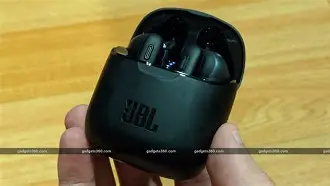
The Tune 225Tws adopt a compact, pebble-like design that prioritizes portability. The earbuds are light and unobtrusive in the ear; when fitted with the correct silicone tips they remain stable during ordinary activities like walking, cycling on smooth roads, or light gym sessions. The outer stem is short compared with longer-stem designs, which some listeners prefer because it reduces leverage on the ear cavity and improves perceived stability.
The charging case is small enough to slip into a pocket, with a matte finish that resists fingerprints. The hinge feels secure and operates smoothly, and the case closes with a reassuring snap. There is no impression of premium metals; the Tune 225Tws lean into practical plastic construction, which keeps weight down and helps reach an affordable price point.
Fit and isolation
Fit is one of the most important practical factors. The Tune 225Tws ship with multiple ear tip sizes; taking time to try all tips significantly improves both comfort and bass response. Passive isolation is adequate for blocking commuter noise like bus engines or office HVAC, but these earbuds do not offer active noise cancellation (ANC). For buyers who want to cut through noisy environments—airports, busy trains—ANC-equipped competitors will outperform the Tune 225Tws.
Sound signature and performance
Sound is where expectations diverge. The Tune 225Tws emphasize a warm, bass-forward signature that suits pop, hip-hop, and electronic music. Bass impact is often the first impression—punchy and prominent, which many listeners enjoy for casual listening. Mids are present but can feel recessed by comparison, particularly when bass-heavy tracks are played at high volume. Vocals are clear enough for podcasts and spoken-word content, but critical listeners may notice a lack of detailed texture in upper mids.
High frequencies are smooth rather than bright, avoiding fatigue at higher volume levels, but this also means cymbal shimmer and the finest high-frequency detail are subdued. The overall presentation is tuned for fun and energy rather than analytical transparency. That makes the Tune 225Tws an easy daily companion for listeners who prioritize engaging, bass-forward playback over studio-accurate fidelity.
Call quality and microphones
Call performance is solid for the category. The earbuds’ microphones pick up voice consistently in quiet to moderately noisy environments. In windy or crowded outdoor settings, wind noise and background chatter will sometimes intrude, which is typical for earbuds without advanced beamforming and wind-suppression hardware. For office calls or video meetings from home, they perform well enough; users who rely on crystal-clear voice pickup in noisy outdoor contexts should consider purpose-built true wireless models with enhanced call microphones.
Connectivity and latency
Bluetooth pairing is straightforward and reliable; reconnection after the first pairing occurs quickly. In typical smartphone usage the connection is stable across a small apartment or a short walk. Latency will be acceptable for video streaming and casual gaming, but competitive gamers and people sensitive to lip-sync delay may notice lag during fast-paced games. There is no dedicated low-latency gaming mode on many earbuds in this tier, so buyers should temper expectations if low latency is a core need.
Battery life and charging
Battery life in real-world usage depends on volume and feature use. On moderate listening levels, listeners can expect multiple hours of playback per charge, with the charging case providing additional top-ups that extend total listening time through the day. The case charges via a modern connector (USB-C on most contemporary midrange earbuds), and quick-charging capabilities provide useful short bursts of playback from a brief charge—useful for last-minute commutes.
Discover deals on Audio & Headphones — updated daily.
View Offers →Battery degradation over prolonged use is a consideration for anyone who keeps earbuds for multiple years; replaceable battery options do not exist for true wireless buds, so longevity expectations should be managed.
Controls and companion software
Controls on the Tune 225Tws are handled by buttons or touch-sensitive surfaces depending on the specific model version. Tap sequences and long presses cover playback, calls, and voice assistant access. The control set is intuitive but not exhaustive: users who want fully customizable gestures or advanced in-app equalization may find the companion app limited. Basic EQ presets and firmware updates—where available—address common preferences and stability improvements.
Durability and IP rating
For active use, these earbuds often carry a modest water-resistance rating suitable for sweat and light moisture during workouts. They are not intended for swimming or heavy exposure to rain. Buyers who train outdoors in unpredictable weather or who want swim-safe earbuds should look for higher IP ratings.
Pros & Cons
- Pros:
- Comfortable, lightweight design for extended wear
- Punchy, bass-forward sound that many listeners enjoy
- Compact charging case that pocketably extends battery life
- Reliable Bluetooth pairing for everyday use
- Good call quality in quiet to moderate environments
- Cons:
- No active noise cancellation—less effective in very noisy settings
- Mids and highs can lack finer detail compared with more expensive models
- Companion app and EQ options (if present) are basic
- Not the best choice for low-latency gaming
- Durability limited to sweat/water resistance—avoid heavy rain or swimming
Comparison with similar options
To put the Tune 225Tws into context, the table below compares it against two competitors commonly considered by budget-conscious buyers. The figures and descriptors are meant to illustrate where the Tune 225Tws sit relative to typical alternatives. Buyers should weigh which features matter most to them before deciding.
| Feature | Tune 225Tws | Anker Soundcore Life P2 | Jabra Elite 3 |
|---|---|---|---|
| Sound signature | Bass-forward, warm | Balanced with emphasis on clarity | Balanced, vocal-forward |
| Active Noise Cancellation (ANC) | No | No (select models: hybrid passive) | No (some Jabra models include ANC in higher tiers) |
| Battery life (earbuds per charge) | Moderate (several hours) | Moderate to long | Moderate |
| Case top-up | Yes (multiple top-ups) | Yes | Yes |
| IP rating | Sweat/water resistant | IPX7 on many models (better for workouts) | IP55 (good for sweat and splashes) |
| Companion app / customization | Basic or limited | Full app with EQ and presets | Robust app with EQ and firmware updates |
| Call quality | Good in quiet environments | Good | Very good—often recommended for calls |
| Price positioning | Budget to midrange | Budget | Midrange |
Real-world use cases
Commuting and travel
For daily commuters who listen to podcasts or playlists on trains and buses, the Tune 225Tws work well when paired with moderate volume. Passive isolation removes a fair amount of ambient noise, but in particularly loud transit environments the absence of ANC means more environmental noise will get through compared with ANC-enabled rivals. That said, their compact case and comfortable fit make them convenient for slotted pockets and short charging opportunities between legs of a trip.
Work from home and calls
Remote workers who take frequent video calls will find the Tune 225Tws acceptable for most home office scenarios. Their microphones pick up speech clearly in quiet rooms, and the earbuds are unobtrusive over long meetings. For those in shared or noisy home environments, an ANC-enabled headset or a dedicated on-desk microphone will provide better call isolation.
Exercise and outdoor use
Light workouts and treadmill sessions are well within the Tune 225Tws’ comfort zone—assuming the correct tip size is used. For outdoor runs near traffic, their passive isolation improves immersion, but buyers should be cautious: awareness of ambient sounds is important for safety, and some runners may prefer semi-open designs or ANC-off modes that preserve situational awareness. For heavy sweating or frequent outdoor training in wet conditions, higher IP-rated options are safer.
Casual listening and background music
Those who want a fun, engaging sound for commuting playlists, background music while cooking, or casual listening will appreciate the Tune 225Tws’ lively bass and forgiving upper register. They are not positioned as audiophile gear, but for everyday enjoyment they often check the right boxes.
Buying guide: how to decide if the Tune 225Tws are right for you
Use the following checklist to match product strengths to personal priorities before making a purchase decision.
Discover deals on Audio & Headphones — updated daily.
View Offers →1. Prioritize sound signature or accuracy?
If the buyer wants a bass-forward, enjoyable sound for pop and hip-hop, the Tune 225Tws are a good fit. If the priority is accurate, neutral reproduction for classical, acoustic, or critical listening, consider models tuned for balance and detail, or those with richer EQ controls.
2. Do you need active noise cancellation?
If ANC is essential—daily heavy commuting, frequent air travel, or very noisy workplaces—do not choose the Tune 225Tws. Look for earbuds explicitly marketed with hybrid or adaptive ANC.
3. How important are calls and voice pickup?
For primarily home-office use with calls in relatively quiet rooms, the Tune 225Tws are acceptable. For outdoors or in noisy shared spaces, choose an option with advanced microphone arrays and noise-reduction features.
4. Will you use earbuds for exercise?
For casual gym sessions and light outdoor exercise, the Tune 225Tws are suitable. Serious athletes or swimmers should opt for higher IP ratings and models designed for rugged use.
5. Do you need multiple device pairing or advanced app features?
Power users who switch frequently between laptop, phone, and tablet, or who want deep EQ customization, might find the Tune 225Tws limited. Check the companion app’s features and whether multipoint connectivity is supported if that’s a requirement.
6. Longevity and battery expectations
Plan for battery life reduction over multiple years; no true wireless earbud battery is designed to be replaced by the user. If long-term lifespan without performance decline is a must, budget for periodic replacement or opt for brands with strong update support and warranty coverage.
Practical tips for getting the best from Tune 225Tws
- Try all included ear tips—small differences in fit dramatically change both comfort and bass performance.
- Use the companion app (if available) to apply EQ presets or slight treble boosts to recover high-frequency detail.
- Keep firmware updated to benefit from connection stability and microphone improvements.
- Carry the case for additional charges during travel rather than relying on single-charge endurance.
- Use moderate volumes in noisy environments to avoid masking midrange clarity with bass lift.
Conclusion
The Tune 225Tws True Wireless earbuds offer an appealing blend of portability, comfortable wear, and a fun, bass-forward sound that will please many casual listeners. They excel as everyday companions for commuting, background music, and light workouts, where portability and an engaging sonic profile are the priority. However, they are not the ideal choice for buyers who require active noise cancellation, studio-grade clarity, advanced call isolation in noisy outdoor conditions, or highly customizable app-based tuning.
In short, prospective buyers should map their most-used scenarios against the strengths and trade-offs described here. If enjoyable bass, comfortable fit, and simple, reliable connectivity cover most of one’s needs, the Tune 225Tws make sense. If noise cancellation, detailed fidelity, or robust app features are non-negotiable, it is worth considering alternatives before making a final decision.